

Article
Multiple Regression for Predicting Paper Basis Weight
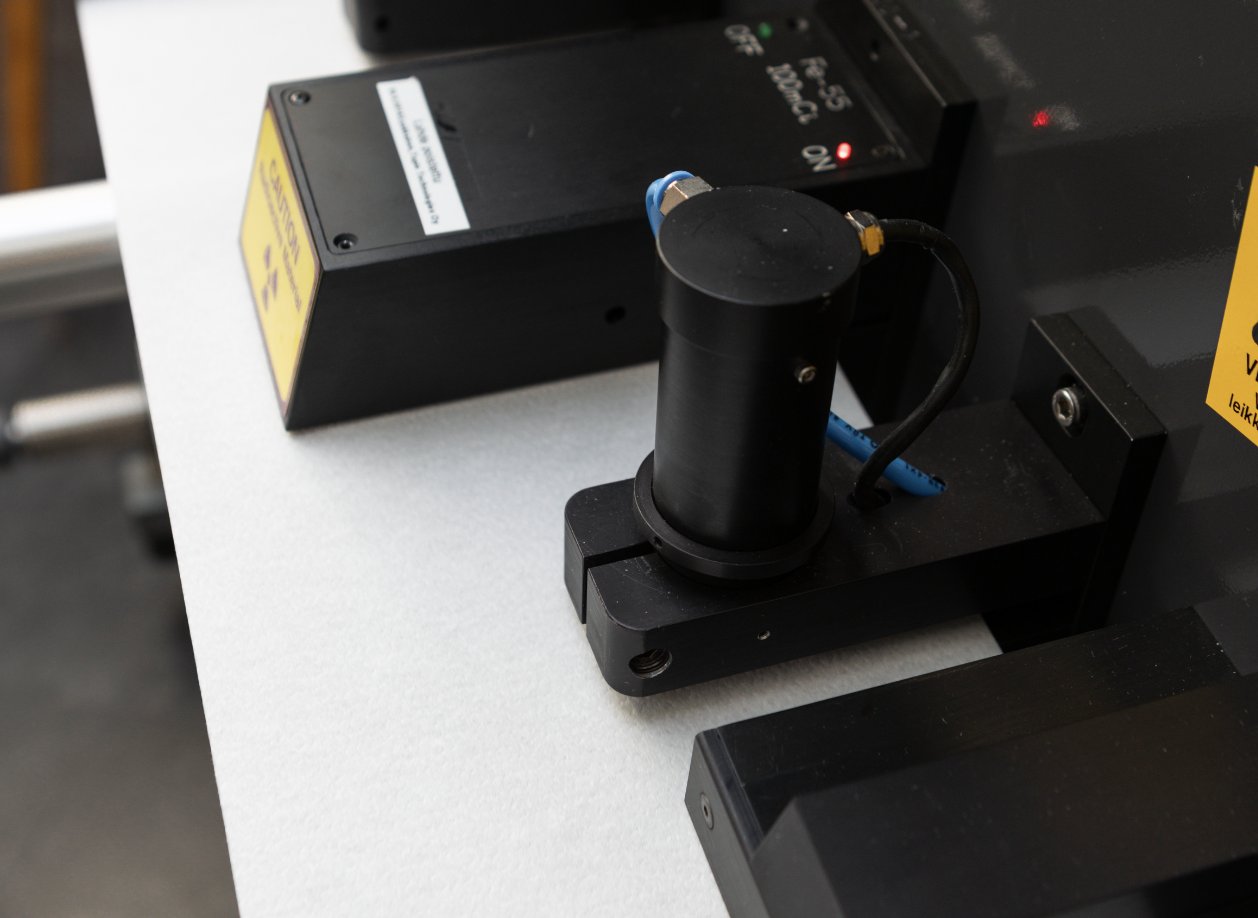
For decades, the paper industry has relied on beta-radiation gauges to measure basis weight, one of the most important quality parameters in paper, board and nonwoven products. In a recent bachelor’s thesis conducted by Nuutti Loikkanen at Tapio Measurement Technologies, we explored an approach for predicting basis weight by combining high-resolution optical transmissivity data with thickness (caliper) measurements through multiple regression analysis.
Using the Tapio Analyzer and Tapio Analysis software, the study examined four different paper grades, including uncoated paper, gypsum board liner, and coated food-grade paper. Three separate regression models were developed and evaluated to determine whether the combination of physical thickness and optical density measurements could compensate for the natural variation caused by fiber orientation, fillers, and other paper structure phenomena.
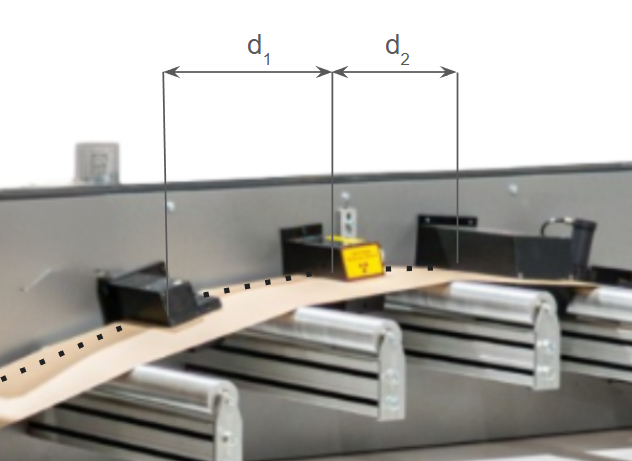
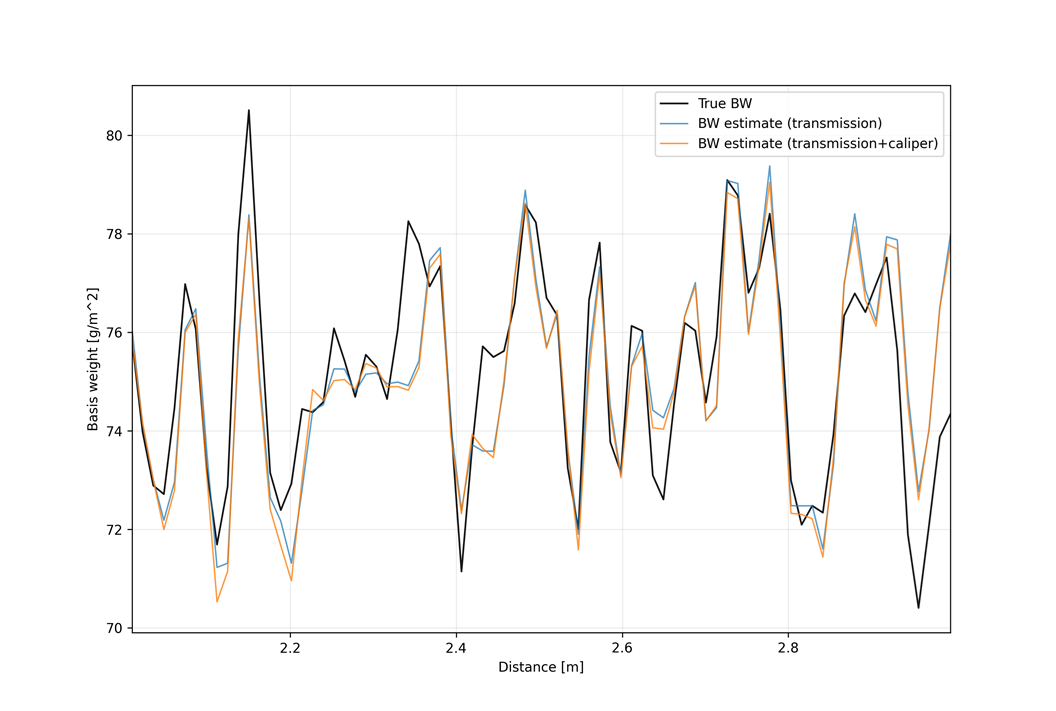
The results show that the best-performing linear models including caliper data improved channel correlation by up to seven percentage points compared to linear models using transmission measurements alone. As expected due to increased light scattering in thicker papers, the study shows that caliper data contains complementary information for transmission-based basis weight estimation. Correlating channels measured at the same point is also central to troubleshooting, for example when locating problematic machine elements.
The thesis is written in Finnish. The full report is available as a PDF: Loikkanen, bachelor's thesis (PDF).
Tapio Analysis measurements are available as a service from customer-provided CD strips or MD rolls.
We typically respond within one working day.
Talk to us about your measurement
Sensors, analyzer configurations, software or analysis methods: tell us what you need to measure.